When selecting a protective housing for sensitive electronics in harsh environments, engineers often find themselves debating between a nema 4 vs nema 4x enclosure. Both ratings offer exceptional protection against water and dust, but understanding the nema 4x difference is crucial for ensuring the longevity of your equipment without overspending. In this guide, we will break down nema 4 vs 4x, compare material choices, and explain why anodized aluminum from YONGU might be the smart, cost-effective alternative to heavy stainless steel.
NEMA Ratings at a Glance
The National Electrical Manufacturers Association (NEMA) defines standards for different grades of electrical enclosures. These ratings indicate a specific enclosure's ability to withstand environmental hazards such as dust, water, ice, and corrosive agents. Before diving into the specifics of Type 4 and Type 4X, it is important to note that NEMA ratings are specifically tailored for North American standards. If you are comparing global standards, we highly recommend reading our comprehensive guide on NEMA vs IP Ratings to fully understand how these specifications translate internationally.
NEMA 4: Protection & Applications
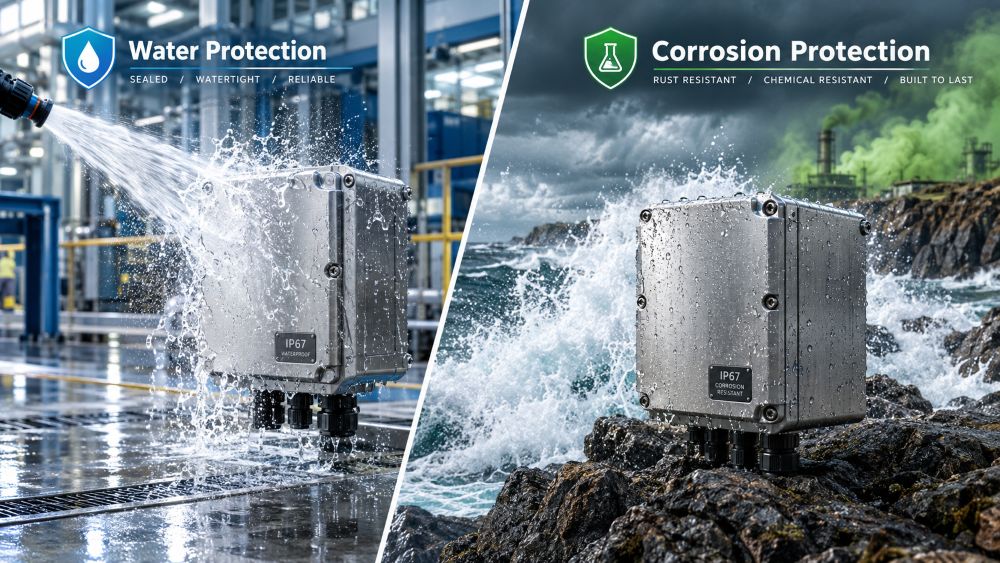
A standard NEMA 4 enclosure is designed for both indoor and outdoor use. Its primary function is to provide a solid degree of protection against falling dirt, rain, sleet, snow, windblown dust, and most importantly, splashing water and hose-directed water.
Common Applications:
- Manufacturing factory floors subject to routine washdowns.
- Outdoor electronics exposed to typical weather conditions.
- Traffic control cabinets and outdoor telecom equipment.
While NEMA 4 is highly waterproof, it lacks one critical feature: specialized protection against severe corrosion.
NEMA 4X: The Corrosion-Resistant Upgrade
The ultimate nema 4x difference lies in the "X", which stands for added corrosion resistance. A NEMA 4X enclosure provides all the rigorous water and dust protection of a NEMA 4 box, plus a high level of defense against corrosive chemicals, saltwater spray, and harsh industrial solvents.
Common Applications:
- Offshore and marine environments (saltwater exposure).
- Chemical manufacturing plants.
- Food and beverage processing facilities (where harsh chemical washdowns are frequent).
- Wastewater treatment plants.
Key Differences Table
To easily compare nema 4 vs 4x, refer to the breakdown below:
| Feature | NEMA 4 | NEMA 4X |
|---|---|---|
| Indoor & Outdoor Use | Yes | Yes |
| Protection against dust & dirt | Yes | Yes |
| Hose-directed water & washdowns | Yes | Yes |
| Corrosion Resistance | No (Standard protection only) | Yes (High-level protection) |
| Typical Materials | Powder-coated steel, standard aluminum | Stainless Steel, Polycarbonate, Anodized Aluminum |
Material Options: Aluminum vs Stainless Steel
Historically, when engineers needed a NEMA 4X enclosure, they defaulted to 304 or 316 Stainless Steel. While stainless steel offers excellent corrosion resistance, it is notoriously heavy, difficult to machine, has poor heat dissipation, and is significantly more expensive.
At YONGU, we advocate for a smarter alternative: Premium Anodized Aluminum Enclosures.
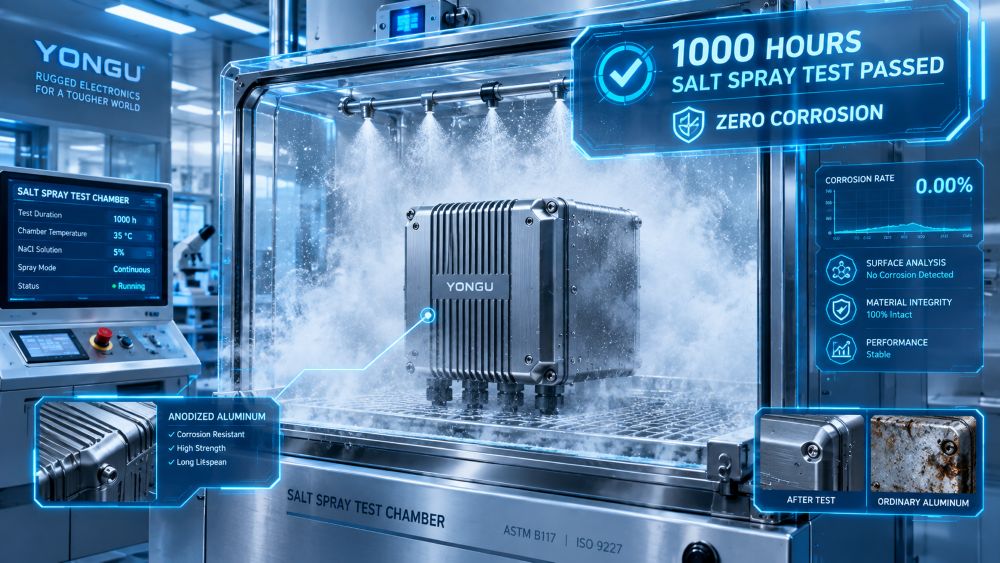
- Corrosion Resistance (Meeting NEMA 4X Standards): Through advanced anodizing processes, a tough, oxidized protective layer is built directly into the aluminum surface. As our independent Salt Spray Test Data shows, YONGU's anodized aluminum easily passes the rigorous 1000-hour neutral salt spray test (NSS) with zero signs of structural corrosion.
- Weight & Cost: Anodized aluminum is up to 60% lighter than stainless steel, drastically reducing shipping and installation costs. It is also significantly more budget-friendly to manufacture.
- Heat Dissipation: Aluminum is a superior thermal conductor compared to stainless steel. For electronics that generate heat, an aluminum enclosure acts as a natural heatsink, preventing sensitive components from overheating.
When to Pay Extra for 4X
Choosing between a nema 4 vs nema 4x enclosure comes down to your installation environment. You should invest in NEMA 4X if your equipment will be deployed near the ocean, subjected to road salts during winter, placed in chemical splash zones, or subjected to intense cleaning agents (such as in medical or food industries).
However, paying for that extra protection doesn't mean you have to break the bank on stainless steel. By choosing YONGU's anodized aluminum enclosures, you can achieve the corrosion resistance required for harsh environments at a price point much closer to standard materials.
Aluminum Enclosures Meeting NEMA 4/4X
For decades, YONGU Enclosure has specialized in high-quality aluminum housings designed for the toughest conditions. Our rugged waterproof aluminum series utilizes precise CNC machining, thick internal sealing gaskets, and military-grade surface anodizing to ensure ultimate protection.
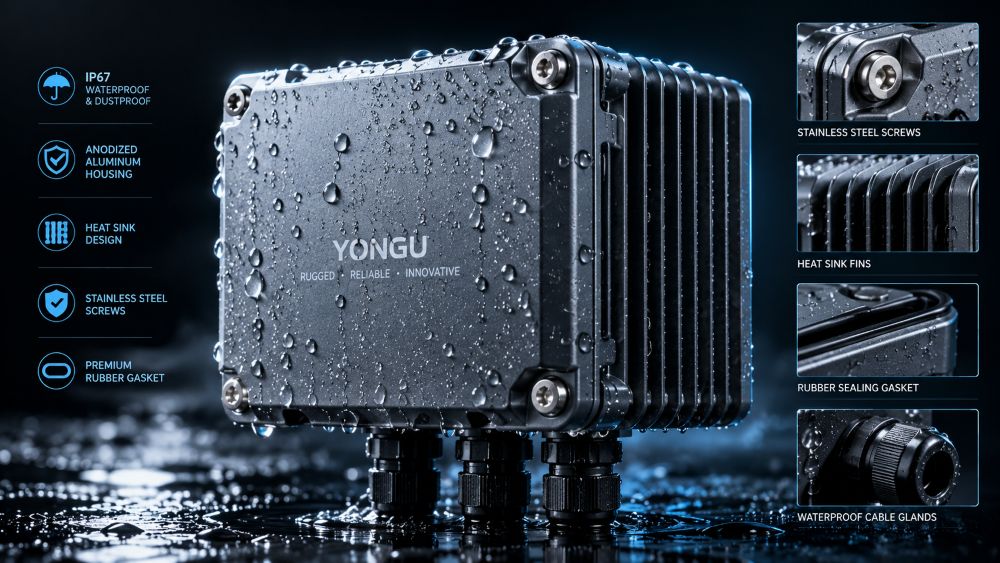
Whether your project requires standard NEMA 4 water protection or extreme NEMA 4X corrosion defense, YONGU provides fully customizable solutions. We offer custom cutouts, laser engraving, and custom coloring (via anodizing) that won't flake off or rust.
FAQs
Q: Can a NEMA 4 enclosure be upgraded to NEMA 4X?
A: You cannot easily upgrade an existing enclosure unless you apply highly specialized, industrial-grade anti-corrosion coatings. It is much safer and more cost-effective to purchase an enclosure already rated for your environment, such as our anodized aluminum options.
Q: Is the nema 4x difference only about corrosion?
A: Yes, the primary difference is the added corrosion resistance. Both ratings offer identical, high-level protection against solid objects and water ingress, including hose-directed washdowns.
Q: Why choose YONGU anodized aluminum over polycarbonate for NEMA 4X?
A: While polycarbonate (plastic) is corrosion-resistant, it completely lacks electromagnetic interference (EMI) shielding, structural rigidity, and heat dissipation properties—features that aluminum naturally provides for high-performance electronics.
Ready to Protect Your Electronics?
Don't leave your sensitive equipment vulnerable to water and severe corrosion. If you're looking for lightweight, cost-effective, and highly durable aluminum enclosures that meet the rigorous demands of NEMA 4 and NEMA 4X environments, the YONGU team is here to help.
Contact YONGU Today to discuss your custom project, request a quote, or learn more about our 1000-hour salt spray tested anodized aluminum solutions!