Shielding Precision: The Engineer's Guide to Test Instrument Housing
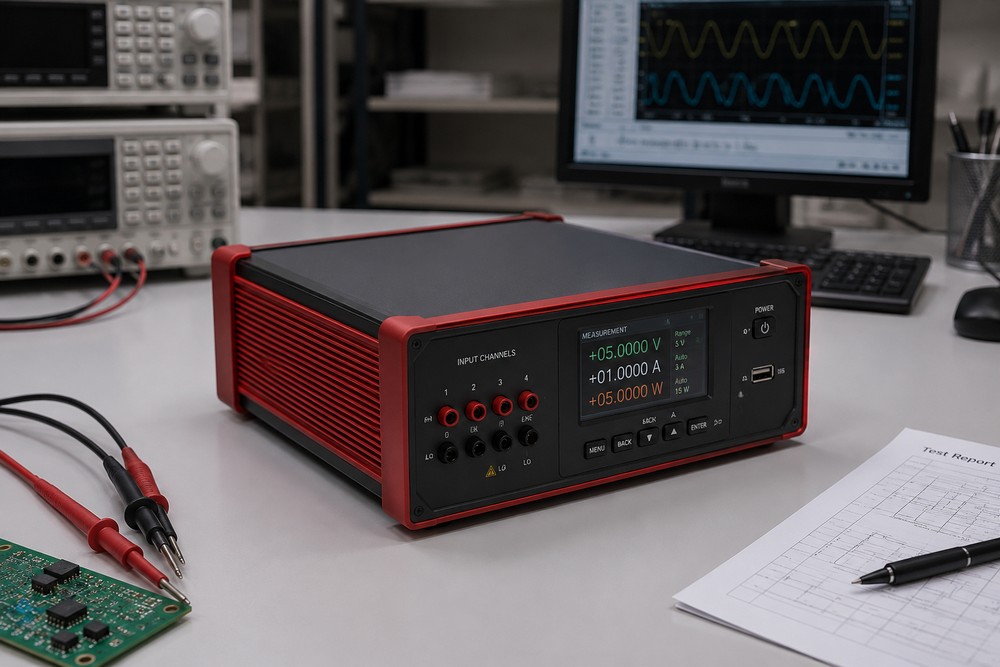
Test engineers and hardware developers know the nightmare all too well: You spend months calibrating a high-frequency oscilloscope, signal generator, or custom spectrum analyzer, only to have the field prototype fail. Why? Because external electromagnetic interference (EMI), ambient radio frequency interference (RFI), and subtle temperature drifts can completely invalidate precision measurements. Phantom signals and thermal throttling are the enemies of diagnostic accuracy.
More often than not, the weak link is rarely your meticulously designed PCB—it is the packaging. For high-fidelity testing instruments, selecting the right housing is just as critical as the circuitry inside. It must act as a fortress against environmental variables.
Why Material Science Dictates Measurement Accuracy
When dealing with sensitive diagnostic and measurement tools, the physical barrier between your internal components and the outside world must master three critical functions: structural rigidity against drops, passive thermal dissipation, and electromagnetic isolation.
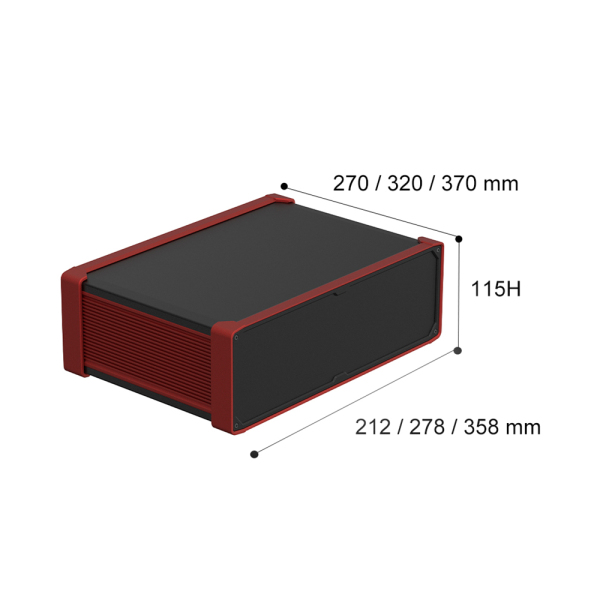
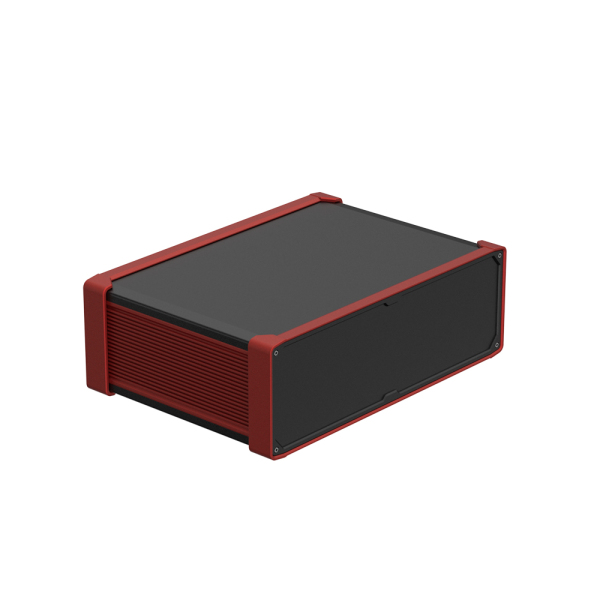
This is precisely why an Aluminum electronic test equipment enclosure is the universal standard for premium lab and field instruments. Unlike polycarbonate plastics that trap processor heat and offer zero electromagnetic protection, high-grade aluminum serves as a natural, highly conductive Faraday cage while acting as a giant passive heatsink.
Material Comparison for Test Instruments
| Material Type | EMI/RFI Attenuation | Thermal Conductivity | Weight-to-Strength Ratio | Best Use Case |
|---|---|---|---|---|
| Extruded Aluminum | Excellent (Natural Faraday Cage) | High (Dissipates heat quickly) | Excellent | Spectrum analyzers, oscilloscopes, RF testers |
| ABS / Polycarbonate | None (Requires copper conductive coating) | Poor (Acts as an insulator) | Moderate | Low-voltage multimeters, basic sensors |
| Carbon Steel | High | Moderate | Low (Extremely heavy) | Stationary heavy-duty lab power supplies |
Engineering Scenario: Overcoming RF Leakage in Portable Diagnostics
Imagine your R&D team is prototyping a new portable network analyzer designed for field telecommunications. You’ve packed a powerful processor and sensitive RF modules into a compact board. However, during beta testing near an active server rack, ambient radiation severely skews the device's diagnostic readings. You don't have the time or budget to completely redesign the complex grounding layout on the PCB. What you need is an immediate, foolproof physical isolation solution.
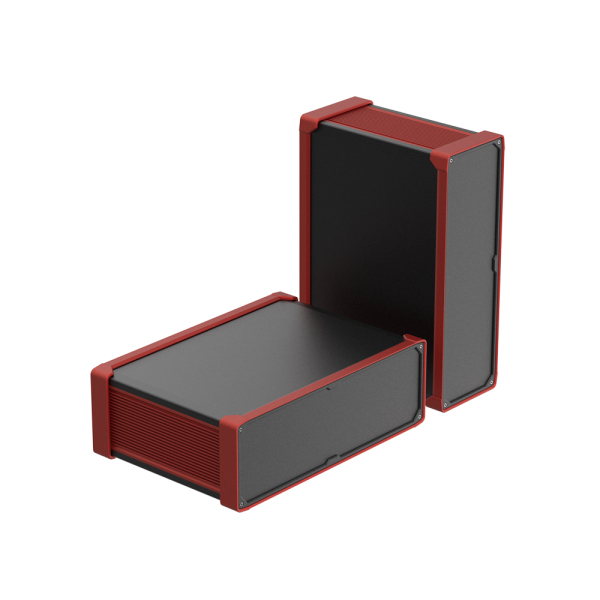
By migrating the hardware into a dedicated, precision-machined Electronic Test Equipment Enclosure, you instantly cut off the RF leakage problem at the source. For engineering teams facing these exact environmental challenges, Yongu provides meticulously crafted enclosure systems. By utilizing Yongu's EMI/RFI shielded test equipment enclosure, your sensitive components are wrapped in a protective, seamless aluminum extrusion. Our precision manufacturing ensures ultra-tight panel tolerances and secure mounting grooves. This prevents the microscopic gaps where high-frequency waves typically penetrate, ensuring your field instruments perform exactly as they did in the controlled, noise-free lab environment.
Frequently Asked Questions (FAQ)
1. What makes an enclosure specifically suited for testing equipment?
Unlike standard desktop project boxes, test equipment requires an environment entirely free from thermal hotspots and electrical noise. A professional test equipment enclosure will feature built-in grounding points, thick extruded walls for shock resistance, and an overlapping or tightly sealed structural design to block out ambient RF and EMI noise.
2. Why should I choose an Aluminum electronic test equipment enclosure over steel?
While steel is incredibly durable, it is heavy and prone to rust if the surface is scratched. Aluminum is non-magnetic, naturally corrosion-resistant, and incredibly lightweight—making it perfect for handheld or portable testers. Furthermore, aluminum provides superior passive heat dissipation for high-powered processing chips commonly found in modern measurement tools.
3. How do I prevent signal leakage after making custom cutouts for screens and ports?
Every time you machine a hole for an LCD screen or a BNC connector, you risk EMI leakage. To maintain the integrity of an EMI/RFI shielded test equipment enclosure, it is crucial to use tight CNC tolerances, conductive gaskets, and shielded connector housings. Partnering with an enclosure manufacturer that provides highly precise, factory-level CNC customization is the best way to ensure your shielding remains uncompromised.
Ready to Secure Your Precision Instruments?
Don't let environmental noise, thermal buildup, and physical damage compromise your critical measurement accuracy. Whether your project requires specialized CNC cutouts for complex I/O ports, custom anodized surface finishes, or advanced electromagnetic shielding solutions, our engineering team is fully equipped to accelerate your R&D process. Elevate your hardware's reliability with a premium Electronic Test Equipment Enclosure tailored to your exact specifications. Contact us today for a free engineering consultation, and let's ensure your test equipment is built to perform flawlessly in any environment.