The Engineer's Guide to Defeating the Elements: Specifying the Ultimate Outdoor Electrical Enclosure
Every year, millions of dollars are lost to equipment failure in remote monitoring, telecommunications, and industrial automation. The culprit is rarely a faulty PCB or a bad line of code. More often than not, it is a compromised outdoor electrical enclosure.
When deploying sensitive electronics in the wild, engineers face a brutal combination of enemies: torrential rain, fine dust ingress, extreme temperature fluctuations, and relentless UV radiation. If your enclosure fails, your system fails—leading to catastrophic downtime and expensive truck rolls for maintenance. To guarantee the longevity of your projects, you must move beyond basic weatherproofing and understand the advanced physics of outdoor enclosure protection.
Demystifying IP Ratings for Extreme Environments
The Ingress Protection (IP) rating is your first line of defense. While an IP65 rating (protected against water jets) might survive a mild rainstorm, it is fundamentally inadequate for harsh outdoor applications where pooling water, heavy storms, or temporary submersion are possible.
- IP66: Protects against powerful water jets. Good for general outdoor use but vulnerable to standing water.
- IP67: Withstands temporary submersion (up to 1 meter for 30 minutes). Ideal for flood-prone areas.
- IP68: The gold standard. Designed for continuous submersion under specific conditions. An IP68 enclosure ensures absolute airtight and watertight integrity, completely eliminating moisture ingress that leads to galvanic corrosion of your circuits.
The Material Debate: Why Plastics Often Fail Outdoors
A common mistake in specifying an outdoor electrical enclosure is relying on standard plastics to save on upfront costs. Over time, UV rays degrade polycarbonate and ABS, causing them to become brittle and crack. Furthermore, plastics are thermal insulators. When high-power components like transformers or motor drives operate inside a sealed plastic box under the summer sun, internal temperatures skyrocket, drastically reducing the lifespan of your electronics.
To make the best engineering decision, consider the following data comparing common enclosure materials:
| Material | UV Resistance | Thermal Conductivity (Heat Dissipation) | Durability against Impacts | EMI/RFI Shielding |
|---|---|---|---|---|
| Polycarbonate (Plastic) | Moderate (Degrades over time) | Very Poor (0.2 W/m·K) | Good | None |
| Fiberglass | Good | Poor (0.04 W/m·K) | Excellent | None |
| Extruded Aluminum | Excellent (Immune) | Excellent (~205 W/m·K) | Excellent | Excellent (Inherent) |
Solving the Thermal and Sealing Challenge
Imagine you are designing an intelligent agricultural monitoring system or an outdoor solar power control unit. Your system requires multiple sensor inputs and power cables to enter the enclosure. Every cable entry point is a potential vulnerability for water to breach the system. Furthermore, the internal power regulators are generating heat that must escape, but you cannot use cooling fans because that would ruin the waterproof seal.
The logical engineering solution is to use a thick-walled metallic housing that acts as a passive heatsink, combined with pre-engineered, tightly sealed mechanical interfaces.
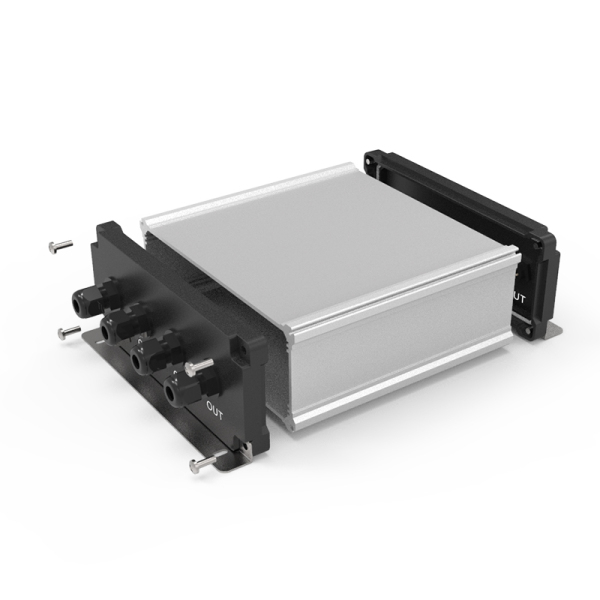
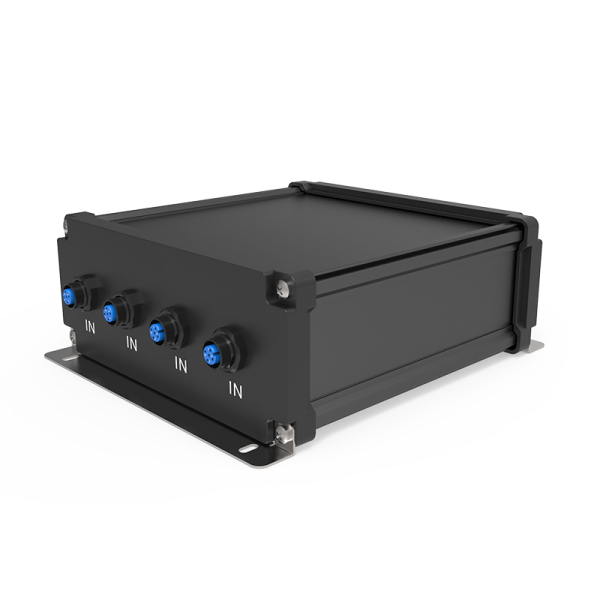
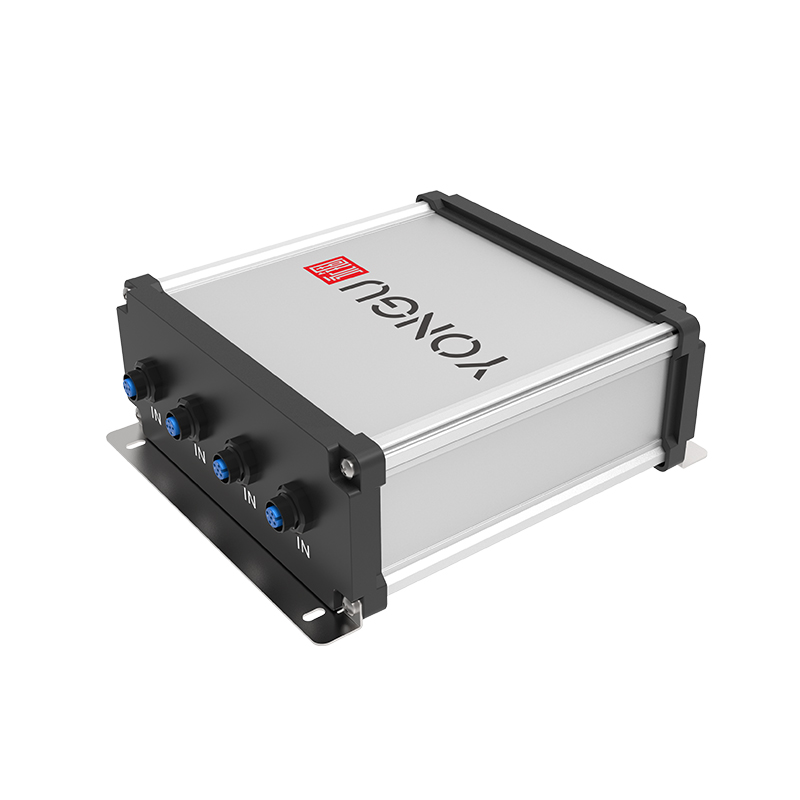
This exact intersection of extreme weatherproofing and thermal management is where precision-engineered solutions like the Outdoor Waterproof Electrical Control Enclosure from YONGU become indispensable. Take, for example, the YONGU IP68 M11 series. By utilizing heavy-duty extruded aluminum, it naturally draws heat away from your internal components and dissipates it into the surrounding air. More importantly, it features an uncompromising IP68 waterproof rating and robust panel designs that accommodate secure, waterproof aviation connectors. This ensures that every cable entry point is as tightly sealed as the enclosure itself, keeping your critical control systems completely safe from the elements.
Frequently Asked Questions
A: Condensation occurs when trapped humid air cools down. To prevent this, assemble your electronics in a low-humidity environment before sealing. Additionally, utilizing breathable waterproof vents (which allow air pressure to equalize without letting liquid water in) or placing silica gel desiccant packs inside the enclosure can effectively manage internal moisture.
A: It depends on the specific environment. Stainless steel is unparalleled for extreme chemical resistance (like in chemical plants). However, extruded aluminum is significantly lighter, easier to machine for custom I/O ports, much more cost-effective, and offers vastly superior heat dissipation, making it the preferred choice for 90% of outdoor electronic control systems.
A: IP68 guarantees absolute protection against all dust ingress and allows the enclosure to be continuously submerged in water beyond 1 meter (the exact depth and duration are specified by the manufacturer, but it is the highest standard level of waterproof protection available for standard enclosures).
Ready to protect your next big project?
Don't let the weather dictate the reliability of your electronic systems. Whether you need off-the-shelf IP68 protection or fully customized CNC-machined cutouts for your specific connectors, YONGU has the expertise to secure your hardware. Contact the YONGU engineering team today for a consultation or a rapid quote on your perfect outdoor enclosure solution.