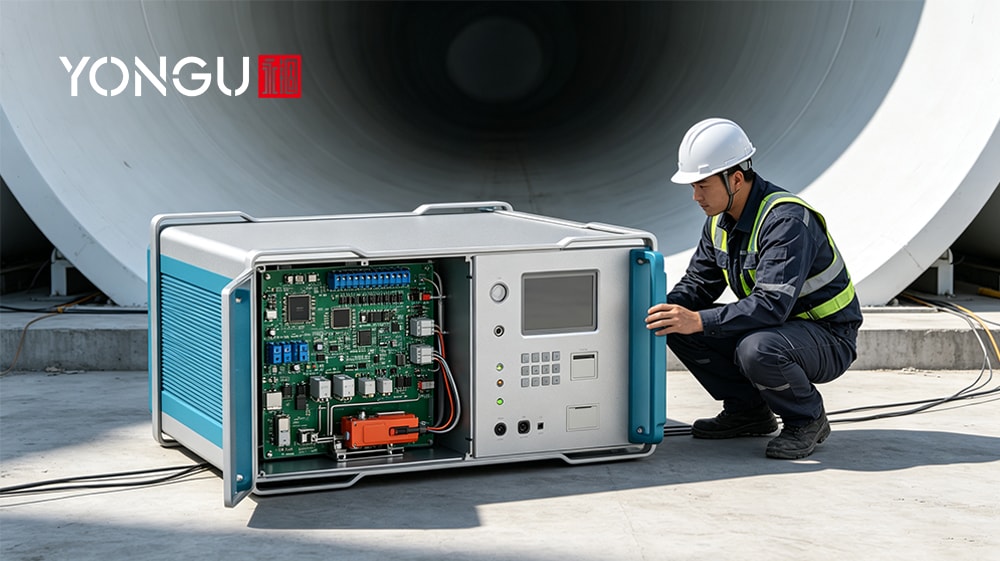
Portable instruments — field testers, data loggers, gas detectors, battery analyzers — must protect sensitive electronics in the field and move with the user every day. The carrying handle is the mechanical interface between human and machine, and it drives the entire enclosure design: size, weight, sealing, mounting and cost. This guide provides engineering numbers you can put straight into a drawing, with real examples from YONGU's handle-design instrument chassis, such as the YONGU Handle Design Instrument Box B02 248*115mm.
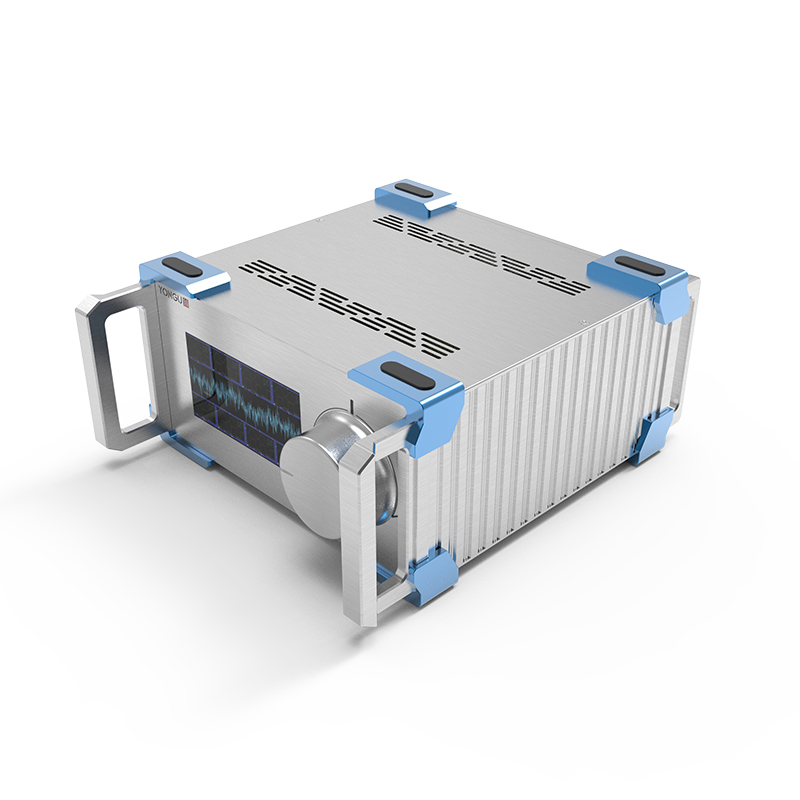
Handle Design & Ergonomics
Selecting a handle is a field-operations decision. Tip-up / bail handles (rotate flat) suit instruments that also slide into a rack; flip-down handles (fold into the top surface) suit stored units; fixed molded grips suit frequent one-hand carry. For 20–30 lb instruments in outdoor fieldwork, a fixed or flip handle with a soft grip is the ergonomic choice.
Numbers to Draw With
• Grip diameter: 30–35 mm for 5–15 kg instruments; below 25 mm causes hand fatigue on long carries.
• Finger clearance: keep 30 mm minimum under the grip so gloved hands fit.
• Rear tilt: 10–15° rearward rake lets the case hang naturally while walking.
• Handle width: ≥115 mm of clear grip span for two-hand carry; align the handle with the vertical plane through the center of gravity so the case does not twist when lifted.
• Materials: TPE or rubber overmold on an aluminum or stainless bar for slip resistance; texture the grip zone.
• Mounting: M5–M6 bolts into blind holes (thread depth ≥ 1.5× diameter); use PEM or HeliCoil inserts in walls under 2 mm; allow 90°+ rotation clearance for tip-up handles.
These standards are exactly what YONGU builds into the B series instrument chassis — CNC-machined aluminum profiles with customizable handles, cutouts and stripe side panels, as on the B02 248*115mm, B10 438*115mm and rack-compatible F08 365*200.4mm.
Size, Weight, Form-Factor & Mobility Options
Start from the use case and work backward: hand carry suits units up to about 8–10 kg and roughly 300×250×150 mm; shoulder strap extends comfort to ~12 kg with reinforced lugs; vehicle-mounted equipment can reach 20–25 kg but needs shock mounts; air travel constrains you to carry-on limits (≈55×40×23 cm) or checked-baggage linear limits (≈158 cm total). Target an empty enclosure weight of no more than 15–20% of the total carried load.
| Use case | Max unit weight | Typical case size | Empty aluminum case weight |
|---|---|---|---|
| Hand carry | 8–10 kg | ≤ 300×250×150 mm | 0.5–1.0 kg |
| Shoulder strap | ~12 kg | ≤ 350×250×180 mm | 1.0–1.8 kg |
| Vehicle mount | 20–25 kg | ≤ 450×300×250 mm | 2.0–3.5 kg |
• Wheels: add a two-wheel kit plus pull handle above ~15 kg; specify wheel load rating and a reinforced bottom plate.
• Strap lugs / D-rings: verify pull-out strength ≥ 20–30 kg before production; use steel inserts in the wall.
• Detachable extensions: slide rails, mounting brackets or a removable lid tray expand the unit for vehicle or bench use without adding weight to the carry core.
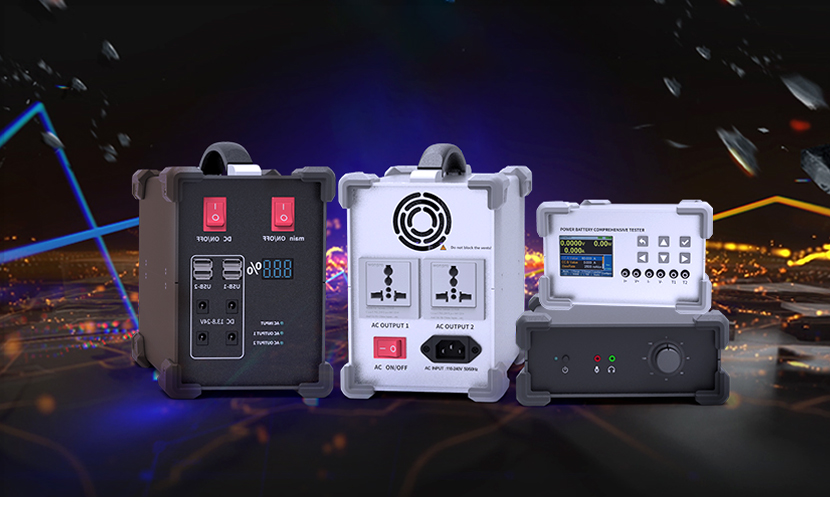
For portable power and instrument cases, YONGU's S series sheet-metal enclosures ship with carrying handles and protective bumpers — the S207 250*110*320mm, S208 280*120*350mm and S209 310*130*400mm are drop-in starting points. For handheld form factors, the A series handheld instrument enclosures are designed for CNC-customized portable instruments.
Environmental Sealing, Shock & Vibration Protection, and Security
IP selection: IP54 (dust-limited, splash) for indoor and light-duty handhelds; IP65 (dust-tight, water jets) for routine field use; IP67 (1 m immersion, 30 min) for wet outdoor work; IP68 only where submersion is real. Every rating step costs gasket material and thermal headroom — pick the lowest rating that covers the actual environment. See our IP54–IP68 selection guide.
Gaskets and Sealing Geometry
• Silicone (−60 to +200 °C, best compression set) for wide temperature swings; EPDM (−40 to +120 °C, best UV/ozone) for outdoor; closed-cell foam (cheap, but higher compression set) for cost-sensitive indoor units.
• Keep flange width ≥ 6–10 mm for the gasket groove; compress foam 20–30%, solid elastomers 15–25%, and add compression stops (molded or machined blocks) so the lid cannot over-compress the seal. See also condensation prevention.
Shock, Vibration and Security Acceptance Criteria
• Shock: elastomer mounts isolate frequencies above ~20–30 Hz; custom-cut foam inserts cradle sensitive PCBs; corner bumpers absorb drops. YONGU's corner-guard enclosures S201/S204/S205 add drop protection to instrument cases.
• Test to these numbers: free-drop per IEC 60068-2-31 (1 m, each face and corner), vibration sweep per IEC 60068-2-6 (10–500 Hz, 1–2 g), and random vibration for transport qualification. Document pass/fail per face — this is the acceptance data buyers actually trust.
• Security: lockable latches and hasp points for padlocks, with latch pull-force verified against the unit weight (a 15 kg case needs latches rated well above 15 kg per latch); corner guards double as strap anchors.
Internal Integration: Mounting, Panel Layout, Connectors, Cable Management & Thermal Management
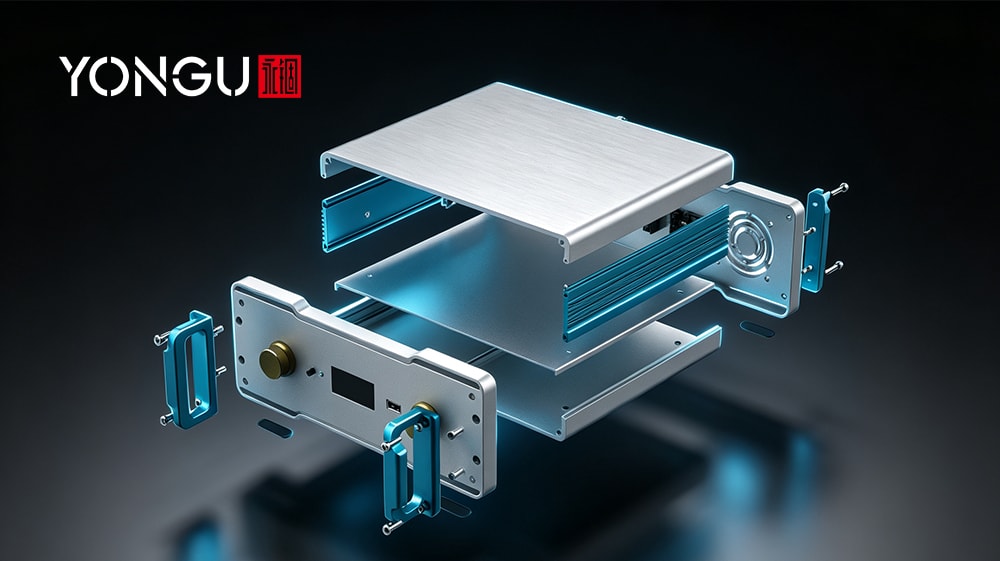
PCB mounting: extruded enclosures provide PCB slots/rails; add M2.5/M3 standoffs or panel screws for heavier boards, adjustable-height support clips for odd boards, and modular trays that can be swapped in the field. Custom-cut foam inserts (CNC or knife-cut from polyethylene/urethane) protect components and double as board retainers — define the component map, cut the foam, then vibration-test the assembly.
Panel layout: group connectors by function (power, I/O, display) and separate noisy switching supplies from sensitive analog zones for EMC. Keep connector pitch at least 2× the largest connector width, and support heavy connectors with a metal bracket that transfers load to the chassis. For strain relief, use cable clamps, grommets or strain-relief bushings and verify pull-out force on the wiring harness (a common target is 10–20 kgf on the cable clamp).
Thermal: vent slots plus a washable dust filter for convection; an aluminum panel or heat bridge with TIM for hot spots; a fan (with filter) above ~10–15 W of internal dissipation; heat pipes only for sealed high-power modules. The aluminum body itself is the most reliable passive heatsink — see aluminum enclosure thermal conductivity. Ground the PCB at one point, bond the front panel to the chassis, and add ferrites on I/O cables; our EMI shielding guide and three EMI design principles cover the layout rules. For prototype assembly, request the DXF panel-cutout template alongside the 3D model so every cutout and standoff lands exactly where the drawing says.
Materials, Finishes, Prototyping, Manufacturing & Cost Considerations
Materials: aluminum 6063/6061 is the default for portable instruments — strong, ~2.7 g/cm³, corrosion-resistant after anodizing, and easy to CNC. Stainless steel wins on corrosion and stiffness but adds 2.6× weight and machining cost. ABS/PC cut weight and cost but need ribs and thicker walls for stiffness; they suit indoor, low-drop products. For coastal US environments, anodized aluminum (336+ h salt spray) is the practical choice — see our coastal corrosion guide.
Finishes: anodizing (hard, UV-stable, up to 9 colors, and a non-conductive option) is the best value for aluminum; powder coating is tougher but thicker; plating suits stainless hardware. Cost impact is roughly 5–15% of part cost for anodize versus 10–20% for powder coat.
Processes and tolerances: CNC milling ±0.05 mm (holes down to ~0.8 mm), laser cutting ±0.1 mm, sheet-metal bending for the S series, injection molding (tooling from $3k–30k) for high volumes, and 3D printing for one-off prototypes. YONGU's custom CNC line covers the prototype-to-batch path: samples in 5–7 days, batch production 15–20 days, MOQ 1 pc. Typical cost: CNC aluminum prototype panels $15–60/pc; production $3–10/pc with an $800–2,500 extrusion die. The main lead-time drivers are material availability, cutout complexity, finish type and testing cycles — see rapid-prototype advantages.
Files to submit with your RFQ: STEP model, DXF of panel cutouts, 2D drawing with tolerances, finish spec, BOM, and any IP/drop/vibration test requirements. YONGU accepts STEP/SOLIDWORKS/CAD/DXF/PDF and provides the product catalog and test reports for reference.
Conversion / CTA
Ready to move? Send us your application brief or CAD file and get a design review with a firm quotation. Downloadable assets we can provide include a handle installation template, panel cutout DXF and a quick evaluation checklist (weight target, IP rating, main interfaces, expected volume). We deliver CAD/STEP examples, 3D-printed prototypes, transparent pricing and realistic lead times — samples in 5–7 days, batch production in 15–20 days with no minimum order. To speed up your quote, attach a short parameter table: use case and environment, dimensions, target weight, IP level, interface list, thermal and EMI needs, and expected annual volume. Contact YONGU via our contact page or email [email protected] — or start from the instrument enclosure selection guide.
FAQ
Which handle style is best for a 20–30 lb portable instrument used in outdoor fieldwork?
A fixed or flip-down handle with a 30–35 mm TPE/rubber overmold grip, 10–15° rear tilt and ≥30 mm finger clearance. Tip-up/bail handles only if the unit also racks or shelves. Verify the mounting with M5–M6 bolts or PEM inserts into the aluminum wall.
How do I choose the right IP rating for a portable instrument enclosure exposed to rain and dust?
IP65 is the practical field default: dust-tight and protected against water jets. Choose IP67 only if the instrument may be briefly submerged; IP54 if exposure is incidental. Higher ratings cost gasket material and thermal headroom.
What are best practices for connector placement and cable strain relief on front or rear panels?
Group by function (power vs I/O vs display), keep ≥2× connector-width pitch, support heavy connectors with a metal bracket, and clamp cables with grommets or strain-relief bushings verified to ~10–20 kgf pull-out.
How can I design internal mounts and foam inserts to protect sensitive PCBs from shock and vibration?
Use PCB rails or standoffs for the board, custom-cut polyethylene/urethane foam cradles around sensitive components, elastomer mounts that isolate above ~20–30 Hz, and corner bumpers. Qualify with IEC 60068-2-31 drop and IEC 60068-2-6 vibration tests.
Which materials and finishes resist corrosion best for equipment used in coastal U.S. environments?
Anodized aluminum 6061/6063 (336+ h salt spray) is the practical standard; stainless steel for hardware. Avoid bare aluminum and uncoated carbon steel. Powder coating adds a tougher top layer where impact risk is high.
What thermal management options work for sealed portable enclosures with moderate heat-generating electronics?
Use the aluminum body as a passive heatsink with a TIM to a panel or heat bridge, vent slots plus washable filters for convection, and a fan only above ~10–15 W internal dissipation. For sealed units, heat pipes or a thicker aluminum wall spread the load.
How long do prototyping and small-batch manufacturing typically take, and what factors most affect lead time and cost?
Prototypes typically take 5–7 days and small batches 15–20 days (YONGU terms, MOQ 1 pc). The biggest drivers are material availability, cutout complexity, finish type and testing cycles; tooling for injection molding adds 4–8 weeks. Submit STEP + DXF + spec to get an accurate schedule.