Ensuring the longevity and peak performance of densely packed electronic components relies heavily on your choice of thermal management housing. Rather than depending exclusively on space-consuming and failure-prone active cooling mechanisms, utilizing an aluminum heat sink enclosure provides the most reliable, passive thermal dissipation. By structurally integrating heat-dissipating fins with superior EMI shielding, engineers can permanently solve overheating issues while maintaining a compact and durable product footprint.
The Hidden Threat to Your PCB: Why Thermal Management Fails
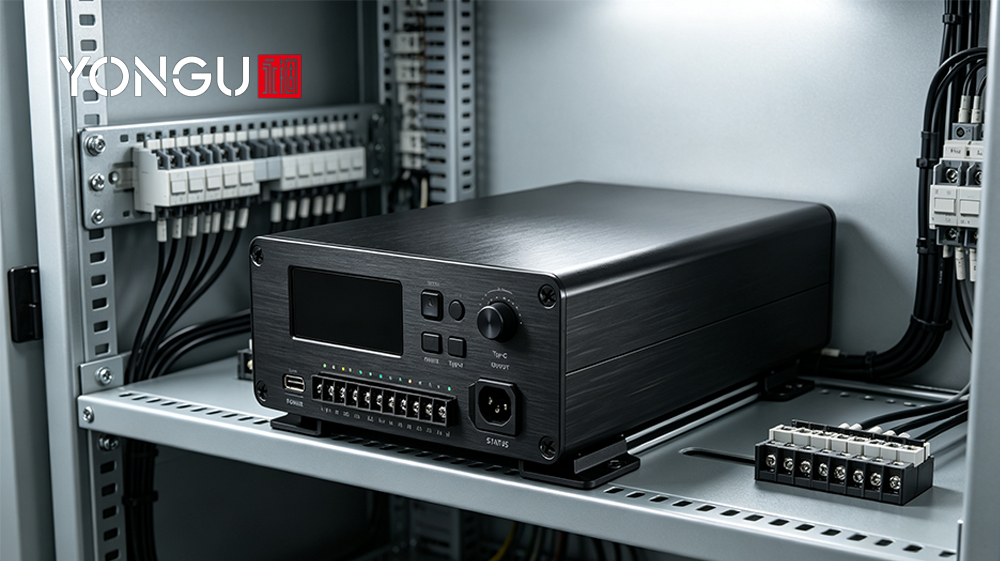
For hardware engineers and electronics product designers, thermal throttling and localized hotspots are persistent nightmares. As modern Printed Circuit Boards (PCBs) shrink in size but multiply in processing capabilities—especially in fields like edge computing, industrial IoT, power amplification, and automotive electronics—they generate highly concentrated thermal loads.
When designers place these powerful components into traditional plastic housings or flat sheet-metal boxes, the trapped air acts as an insulator. The heat generated by power regulators (MOSFETs), CPUs, and motor drivers has nowhere to escape. The resulting elevated temperatures lead to premature component degradation, system lag, unexpected reboots, and compromised safety standards. Resolving these pain points requires thinking beyond the board itself; an effective thermal strategy must begin at the enclosure level.
Essential Design & Selection Tips for PCB Enclosures
Choosing the right housing is not just about aesthetics; it is about engineering a micro-environment that allows your electronics to thrive. Here are the core factors you must consider when designing and selecting a housing solution:
1. Maximize Surface Area with Fin Geometry
The primary advantage of a heat sink housing lies in its external fins. Thermal dissipation in a passive system relies on natural convection. When selecting a housing, evaluate the fin design: deeper fins with adequate spacing allow for better airflow and a larger surface area to dissipate heat into the ambient environment. A housing with carefully calculated external ridges performs exponentially better than a smooth-surfaced alternative.
2. Prioritize the Right Aluminum Alloy (6063-T5)
Not all metals are created equal when it comes to thermal conductivity. While steel is strong, its thermal transfer rate is relatively poor. The industry standard for an optimal balance of structural rigidity, CNC machinability, and thermal conductivity is the 6063-T5 aluminum alloy. This specific extrusion grade pulls heat away from internal components rapidly and is highly receptive to surface treatments like anodizing, which further enhances both corrosion resistance and thermal emissivity.
3. Seamless PCB Mounting and Internal Layout
Vibration and shock are the enemies of solder joints. A high-quality enclosure must secure the PCB firmly. Look for housings designed with internal extruded sliding grooves (card guides). These channels allow standard-thickness PCBs (typically 1.6mm) to slide in perfectly, holding the board securely without the need for complex internal standoffs or excess hardware. This not only speeds up the assembly process but also guarantees a consistent distance between the heat-generating components and the conductive aluminum walls, which is critical when applying Thermal Interface Materials (TIMs).
4. EMI/RFI Shielding Integrity
In industrial and telecommunications applications, electromagnetic interference (EMI) can corrupt data and disrupt functionality. Unlike plastic, an uninterrupted aluminum shell acts as a natural Faraday cage. When choosing a housing, ensure that the front and rear end-panels form a tight, flush fit with the main extrusion to block external frequencies and contain the device's own electromagnetic noise.
Application Scenarios: From Theory to Practice
Imagine deploying an outdoor sensor gateway, an industrial motor controller, or a high-fidelity audio amplifier. The operating environment is harsh, space is strictly limited, and installing mechanical cooling fans is impossible due to the risk of dust accumulation, moisture ingress, and eventual mechanical failure. In these high-stakes scenarios, conducting heat directly from the board to the outer chassis is the only viable path to long-term reliability.
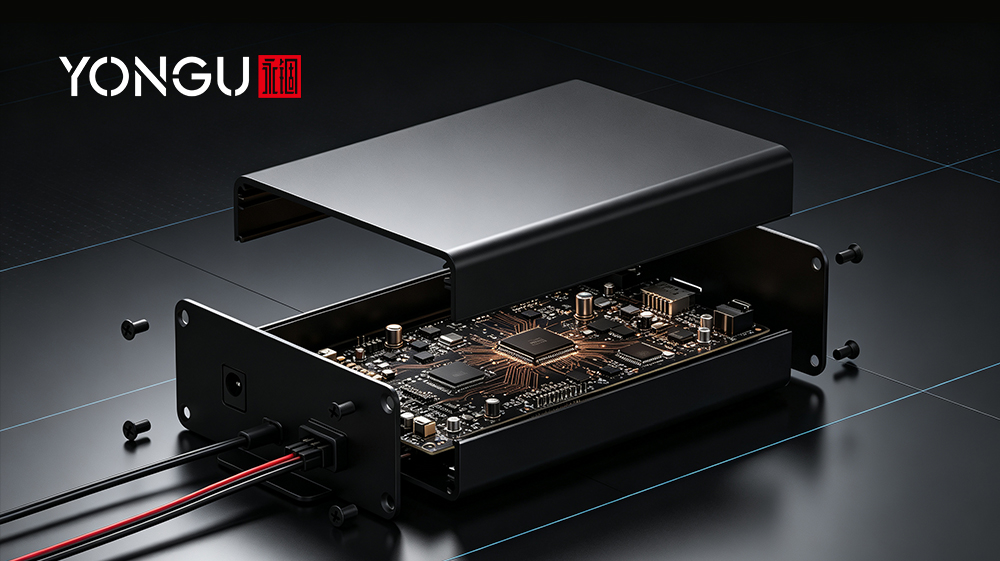
Specifying a purpose-built extruded aluminum box for electronics is the definitive engineering solution for these challenges. When sourcing these critical components, consistency, precision, and customization capabilities are paramount to reducing your time-to-market.
This is exactly where the YONGU Custom Design Aluminum Electronic Box H10A (88*38mm) excels. Specifically engineered to support demanding thermal loads, this high-grade PCB enclosure aluminum comes with integrated cooling fins that dramatically boost convective heat transfer. Inside, it features precise sliding grooves that securely lock your PCB in place. Because no two hardware projects have the same I/O interface requirements, YONGU provides highly precise, in-house CNC machining for custom panel cutouts, alongside premium surface finishing and silkscreen/laser engraving. This allows you to effortlessly scale from initial prototyping directly into seamless mass production, with an enclosure perfectly tailored to your electronic layout.
Performance Comparison: Enclosure Material Selection
To better understand the thermal advantages, refer to the comparison table below which highlights how different materials impact PCB performance.
| Feature | Plastic / ABS Enclosure | Standard Sheet Metal | Extruded Aluminum Heat Sink Box |
|---|---|---|---|
| Thermal Conductivity | Very Low (Acts as an insulator) | Moderate (Prone to hot spots) | Excellent (Rapid heat dissipation) |
| EMI / RFI Shielding | None (Requires extra coating) | Good | Outstanding |
| Structural Rigidity | Low to Moderate | High (But heavier) | High (Lightweight & impact resistant) |
| PCB Mounting Ease | Requires standoffs/screws | Requires standoffs/screws | Built-in slide grooves for instant securement |
| Best Suited For | Low-power consumer gadgets | Large indoor server racks | High-power industrial, IoT, & audio devices |
Frequently Asked Questions (FAQ)
How does an extruded aluminum enclosure improve PCB cooling?
An extruded aluminum housing integrates the structural shell and the heat sink into one seamless piece. When internal heat-generating components (like CPUs or MOSFETs) are connected to the inner wall of the enclosure via thermal pads, the heat is rapidly conducted through the metal. The external fins then increase the surface area, allowing the ambient air to naturally pull the heat away from the device without needing a fan.
Can I customize the cutouts on an extruded aluminum box?
Yes. While the main body is created via an extrusion process that dictates the outer profile and internal grooves, the front and rear panels—as well as the top and sides of the main body—can be CNC machined. This allows for custom cutouts for USB ports, power jacks, antennas, and displays, perfectly matching your unique PCB design.
What is the difference between a standard aluminum box and a heat sink enclosure?
A standard aluminum box has flat, smooth walls. While it conducts heat better than plastic, its surface area is limited. A heat sink enclosure features strategically extruded fins or ridges on its exterior. This wavy or finned geometry drastically increases the surface area exposed to the air, significantly increasing the enclosure’s passive cooling capacity.
Ready to Optimize Your Hardware?
Don't let thermal bottlenecks compromise the reliability of your electronic designs. Upgrading to a professional-grade aluminum enclosure protects your components, enhances your product's premium feel, and guarantees stable operation in challenging environments. Contact YONGU today to consult with our engineering team, request samples, and get a tailored quote for your custom electronic housing solutions!